Department-Level AI Transformation vs. Platform Rollouts
Rebuilding one painful workflow beats rolling AI out everywhere.

Most enterprise AI programs are deploying tools without touching the work itself, and that gap between declared ambition and operational reality is the central problem this piece sets out to diagnose. Deloitte's 2026 State of AI in the Enterprise splits the field into three groups: about a third of organizations are deeply transforming core processes or business models, another third are redesigning key processes around AI, and the final third are using AI at a surface level, with little or no change to how work actually runs. Most companies in that survey have not redesigned anything. That third group still appears in productivity numbers, which lets leadership believe progress is underway even when the underlying process has not moved an inch. Reported AI wins get counted as transformation when they are often just faster typing, a false-positive problem.
Call it the efficiency-at-the-desk paradox. AI can make an individual task faster while leaving everything around it exactly as slow as before, and when that happens the organization gains nothing at the operational level. An employee can draft a report in a fraction of the usual time, but if that report still sits in a manager's queue for days waiting on approval, the desk got faster and the process did not move. That mismatch explains a pattern operations leaders keep running into: platform rollouts that post strong individual-productivity numbers next to flat operational outcomes. The tool worked. The workflow around the tool never changed, so none of the speed made it out the door.
What predicts operational impact from AI
The factor that separates AI programs that move the business from those that don't is whether the company reworked how the process runs. It is whether the company actually reworked how the process runs. McKinsey tested 31 organizational variables against measurable AI business impact, and workflow redesign came out on top by a wide margin: AI high performers were several times more likely than lower performers to have fundamentally reworked their processes when deploying the technology.
That finding holds up under something closer to a controlled test than a survey correlation. An INSEAD and Harvard Business School working paper, "Mapping AI into Production: A Field Experiment on Firm Performance," gave equally equipped startups identical AI access and then tracked what they did with it. The firms that redesigned their workflows end-to-end around AI generated substantially more revenue than the firms that used the same tools to speed up individual tasks within an unchanged process. Same technology, same starting conditions, different outcome, and the variable that explains the gap is structural.
The paper's authors call this the "mapping problem": the hard part of profiting from AI isn't getting access to it or learning to prompt it well, it's figuring out where AI can reorganize the production system itself rather than just assist inside the system that already exists. That reframing matters because it shifts the question operations leaders should be asking. Operations leaders should be asking which process to take apart and rebuild around what the tool can actually do, not which AI tool to buy.
How platform rollouts fail structurally, not incidentally
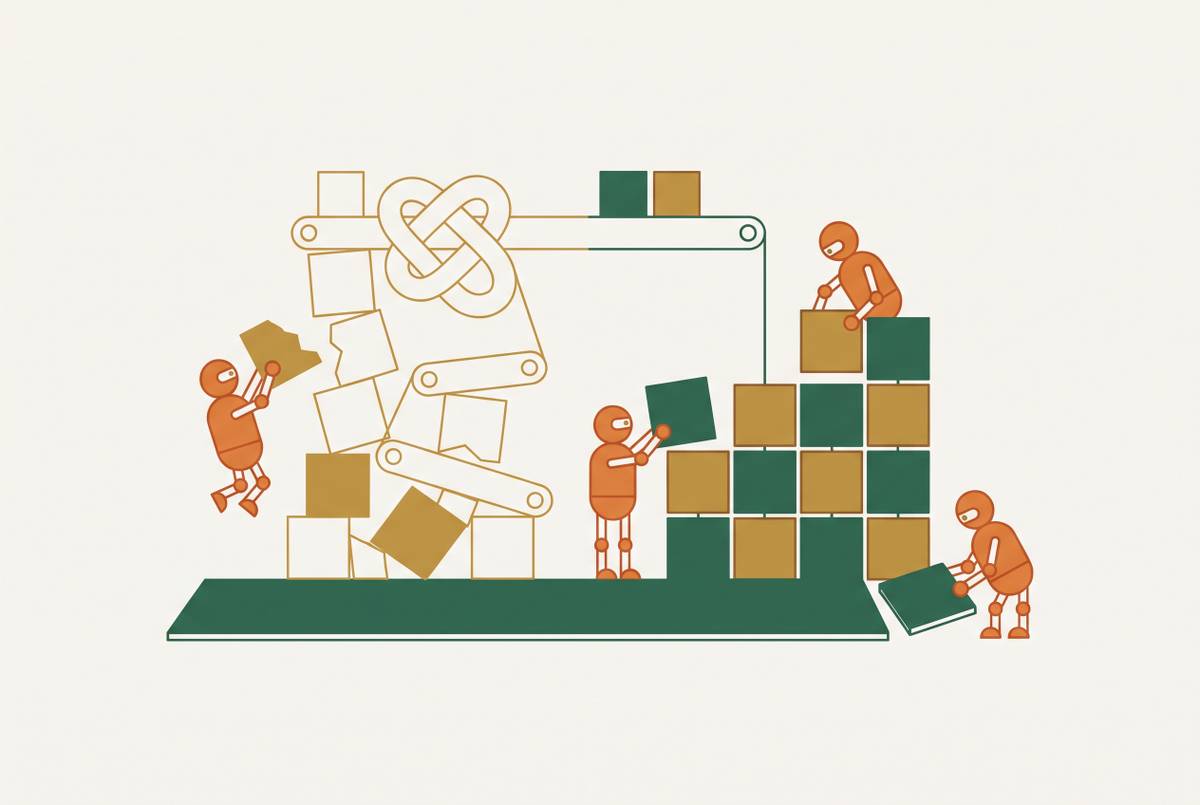
Platform rollouts rarely fail because the AI underperforms in a pilot. They fail because the organizational shape of a broad rollout prevents the very changes to process ownership and governance that make AI redesign stick. Call it the governance bolt-on pattern: a team installs AI on top of an existing process without changing who approves what, where escalation happens, how data moves between hands, or who is accountable for the outcome. The process doesn't get redesigned. It gets a smarter interface bolted onto the same bureaucracy, which is process bloat wearing a better coat of paint.
The scale of that gap is visible in the numbers. A survey of enterprise technology leaders found that a large majority already have at least one AI agent pilot running somewhere in the business, yet only a small fraction have scaled any agent to organization-wide operational use. The same research traces the failure to five recurring gaps: integration complexity with legacy systems, inconsistent output quality at volume, no monitoring tooling in place, unclear organizational ownership, and not enough domain-specific training data. These gaps feed each other. When nobody formally owns a process, nobody builds the monitoring that would catch quality problems early, so those problems compound quietly and appear all at once.
Klarna's experience with AI-driven customer support illustrates the mechanism at work rather than a verdict on the technology. The company used AI to handle a volume of support work equivalent to roughly 700 human agents, then brought humans back for complex cases once quality on those cases dropped, all without scaling back the AI itself. Klarna ended up needing a hybrid approach. Klarna's workflow around the AI was never redesigned to match what it could reliably do and where its limits actually sat.
The most common version of this failure has a familiar shape. A pilot works in one function because a handful of motivated people push it through despite the obstacles. The company-wide rollout of the same idea then stalls because compliance, IT security, and several department heads all want input, nobody holds formal responsibility for the outcome, and as a result nobody makes the calls that would move it forward. Use-case drift sets in, the organization fragments around the decision, and the rollout stops making progress long before anyone declares it dead.
Data readiness problems express that same structural failure from a different angle. Leadership approves a platform AI deployment, the pilot looks solid because the test set was handpicked, and then the system hits shared drives, legacy SOPs, outdated policies, half-maintained CRMs, and conflicting spreadsheets. Accuracy drops, trust in the system evaporates, and employees quietly go back to doing things the old way. None of this is a surprise once you know where to look. The messiest, most inconsistent data in any organization is in the departments that were never specifically prepared for AI to touch them, and broad rollouts touch every department at once.
What department-level transformation means in practice
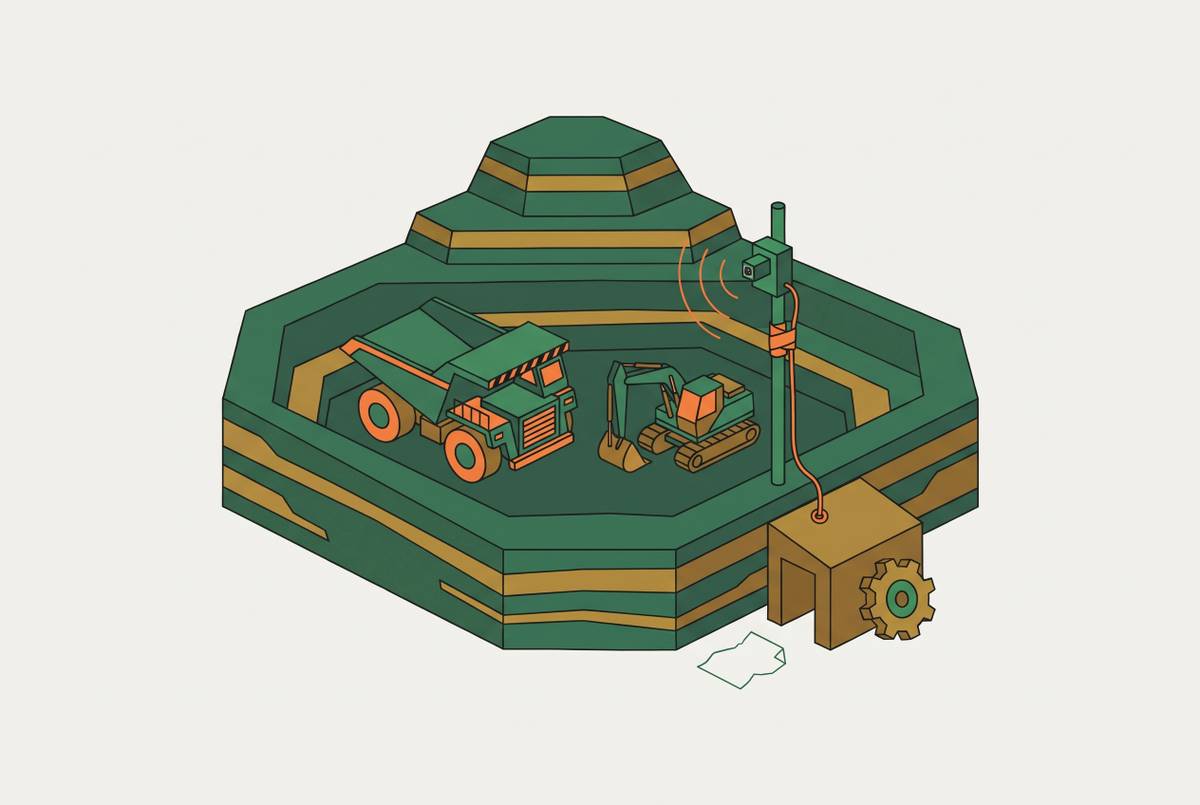
Department-level transformation means taking one specific, painful workflow and rebuilding it end-to-end with AI at the center of the design, not bolting an AI tool onto the department's existing process. That second option is just the platform rollout problem shrunk down to one department, and it fails for the same reason.
Layering a tool onto a process that keeps its existing logic intact produces the same pattern already described, faster work at the desk and no change at the workflow level. Redesign means something more demanding. It means changing what steps exist in the process, who owns each one, what triggers the next step, and how information actually passes between people. Redesign asks whether a process needs to keep its existing steps at all once AI is doing part of the evaluation work.
The starting point is never a platform strategy, a transformation roadmap, or a department chosen because it's politically convenient. It's a specific process that is causing real, named pain today. Getting there requires an honest process audit that maps how the work runs right now, where it bottlenecks, where it breaks, and where the cost of the breakage lands. Skipping that audit is where most department-level efforts fail even when they avoid the platform trap, because without it, nobody can say with any confidence what to rebuild first.
Deloitte's 2026 AI in Manufacturing report gives a useful filter for picking that first process: AI creates the most value in work with high variability, many interacting parameters, and real operational consequences when it goes wrong. That's a profile for selecting where to start, not a license to deploy everywhere at once. The same report found Quality leading AI adoption in manufacturing at 62 percent, with Production and Logistics/Supply Chain following. Those three functions lead because they share rich process signals, outcomes that are easy to measure, and clear operational ownership, which are the three conditions that let redesign actually take hold.
Timelines reveal whether the method is right. Speed is a signal of method: a first live AI-first process should be measurable in weeks, not quarters. When a department's first deployment stretches across two or three quarters before anyone can say whether it worked, that's usually a sign platform thinking crept into a department-sized project, reintroducing the same governance sprawl and data mess at a smaller scale. A narrow, genuinely redesigned process reaches live operation fast because the scope is controlled, one person or team owns it, and the data it depends on is known and manageable.
Field results from department-first redesign in construction, manufacturing, and logistics
The strongest evidence for department-first redesign isn't theoretical. It comes from construction scheduling and procurement, manufacturing quality and production, and logistics supplier integration, sectors where a process failure is visible, costly, and measurable.
In construction, a joint study from Suffolk Construction, the MIT Center for Real Estate, and MIT Media Lab's City Science group, titled Construction in the Age of AI, identified six areas with the greatest near-term potential for AI: design automation, offsite manufacturing, permitting, scheduling, skilled labor and subcontracting, and supply chain and procurement. The study's central argument tracks the thesis here directly: AI delivers its biggest impact when individual tools are connected across the full project workflow, not deployed as isolated point solutions. That conviction underlies firms like Terminal Use, an AI-first operations rebuilder that deploys live AI agents to redesign construction, logistics, manufacturing, and retail department workflows end to end rather than layering tools onto processes that were never built to absorb them. Scheduling tools built by ALICE Technologies put that argument into dollars and days. On a life sciences project where procurement delays threatened a critical milestone, ALICE's analysis adjusted sequencing to cut negative float and the team recovered significant time through targeted acceleration. On a hyperscale data center build in North America, where the general contractor faced a substantial delay, ALICE's scheduling optimization recovered lost time and protected a major revenue position. On a separate data center project, removing soft logic from the schedule and optimizing task sequencing saved weeks that would otherwise have been lost. A 42-story build in Singapore known as Marina Bay Towers used a reinforcement learning system that recalculated continuously against a large set of environmental variables, weather shifts, supply disruptions, crew availability, and delivered a documented reduction in total construction time compared against five similar projects run with traditional scheduling methods. A European mechanical contractor specializing in data center work adopted AI-augmented BIM modeling alongside drone-based progress monitoring, and saw on-time delivery improve substantially, material waste decrease, and its bid win rate rise, because the firm could now back harder schedule commitments with AI-driven probability analysis. None of these results came from a platform. They came from rebuilding one function, scheduling, around what AI could actually calculate that humans could not calculate fast enough by hand.
Manufacturing tells a related but distinct story: adoption is already widespread, but scaling lags far behind it. Deloitte's AI in Manufacturing survey found that a large majority of manufacturers already generate measurable value from AI, yet only about one in five use cases has been scaled consistently across sites or across the enterprise. The competitive line in manufacturing has moved past who has a pilot running and toward who can replicate a working use case across lines, plants, and regions with the same performance, the same governance, and the same level of user adoption everywhere it goes. That's a replication challenge, not an experimentation challenge, and replication only works when the underlying process was redesigned clearly enough to copy in the first place. Deloitte's finding that value concentrates in high-variability processes with many interacting parameters and real operational stakes, assembly lines, primary shaping, chemical and physical transformation steps, describes department-level targets, not an instruction to roll AI out plant-wide. IDC's forecast for 2026 fits the same pattern: more than two-fifths of manufacturers that already run a production scheduling system will upgrade that system with AI-driven capabilities to begin enabling autonomous processes. That upgrade touches one system inside one department rather than a platform initiative spanning the business.
Logistics shows the clearest version of the point, because the wins are concentrated at specific handoff points rather than spread across the function. SAP's 2026 supply chain resilience outlook documents AI agents that autonomously validate supplier credentials, check compliance, and integrate new suppliers into a company's network, cutting onboarding time by up to 50 percent. The same outlook describes agents placing orders automatically when critical inventory needs to shift, which meaningfully reduces lead times. Altana's acquisition of Cervo AI in July 2026 to automate customs brokerage tasks follows the same logic: it targets a named bottleneck, customs clearance for importers juggling diversified supplier bases under constantly shifting tariff rules, rather than offering a general-purpose platform for trade operations. What connects supplier onboarding, automatic reordering, and customs clearance is that each is a narrow, high-friction handoff point where AI was inserted directly, not a logistics-wide capability rolled out across the function at large.
Operations leaders' calculus on platform rollouts
None of this means operations leaders who choose platform rollouts are missing the evidence. They're responding to real organizational incentives that happen to pull in the opposite direction from what the evidence recommends. A single enterprise AI initiative built around one named vendor is easy to budget and easy to describe to a board in one slide. A department-level redesign of, say, procurement scheduling looks small on that same slide, right up until it starts producing results that the platform initiative can't match.
Platform rollouts also come with something boards find hard to resist: a timeline and an ROI figure attached before a single workflow has actually changed. Gartner's research into this exact pattern found that a majority of infrastructure and operations leaders who had lived through an AI project failure admitted, after the fact, that they had expected too much too soon. The technology wasn't the problem. The false confidence baked into the plan before deployment began was the problem.
RAND Corporation's research points to the same gap at a larger scale: a large majority of enterprise AI projects fail to deliver the business value they promised. The space between a declared project timeline and what actually happens on the ground is just as visible in AI rollouts as it is in a construction schedule that slips past its energization date. The plan is not the outcome.
What changes the calculus is simple to state and hard to argue with once it exists: a live, redesigned process that is already producing a measurable result. A finance chief can debate a projected ROI slide for months. The evidence above shows that construction scheduling, manufacturing quality, and logistics onboarding are sectors where department-first redesign already works, one working process at a time.