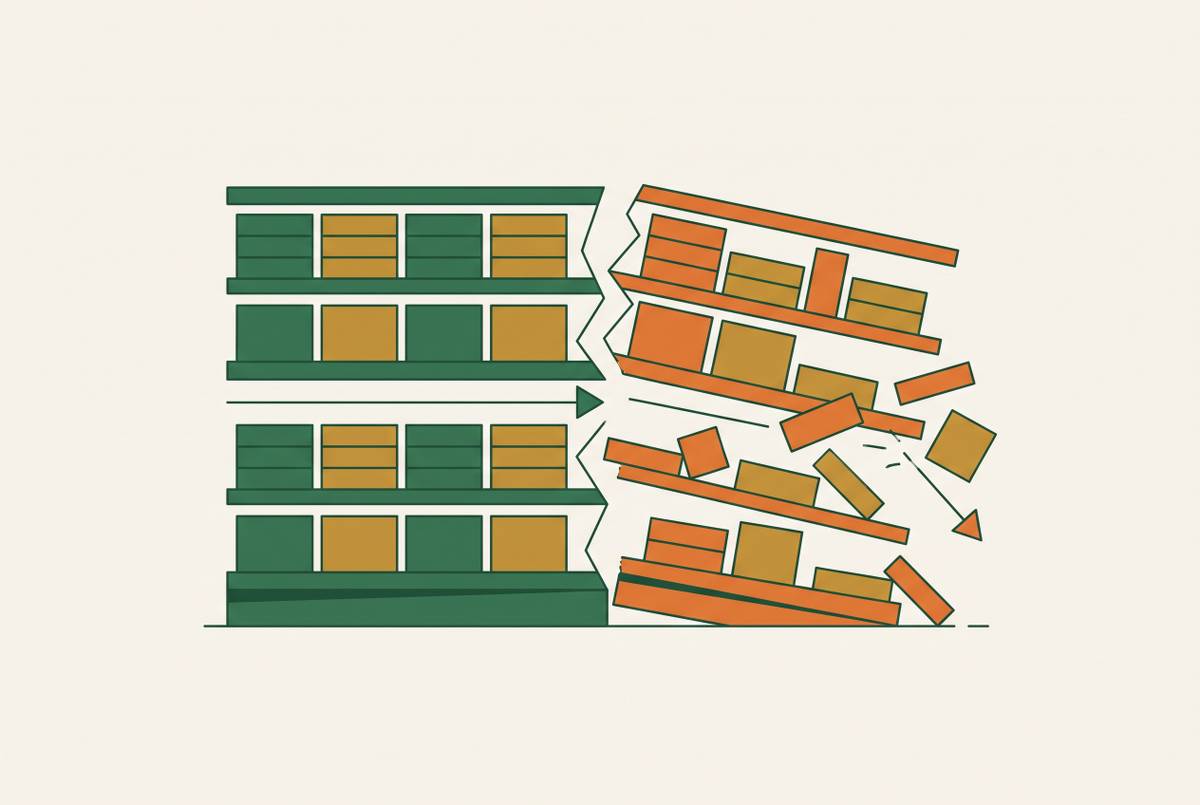
When the Process Was Always Wrong and the Agents Let You Rebuild From the Floor Up
AI agents expose where workflows fail, but only on trusted data.
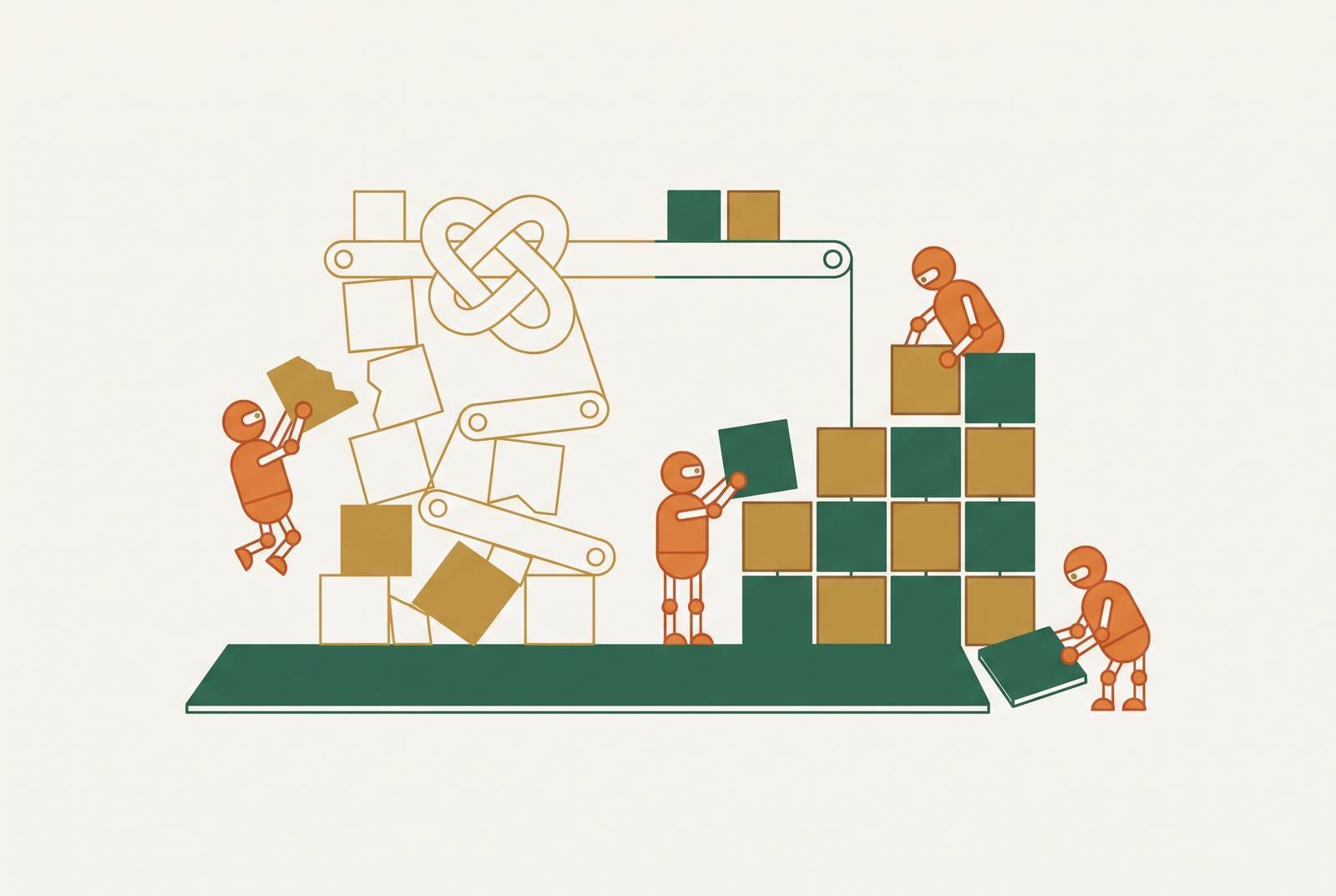
Rebuilding department workflows with AI agents starts with auditing how work actually happens. What sets agents apart is how they connect evidence across systems and show which assumptions in a workflow are wrong. That diagnosis makes rebuilding possible, but only when the organization first establishes that the data agents will act on is trustworthy.
Why construction, logistics, and manufacturing processes were structurally wrong before AI arrived
Construction workflows grew around the needs of each function, with no shared model of how a project runs. Estimating, scheduling, field reporting, safety, quality, and procurement each adopted tools suited to their immediate needs. Each choice could be reasonable in isolation. Together, however, those choices produced different data models, separate logins, and boundaries that people had to bridge whenever a decision depended on more than one function.
Decisions are distributed, time-sensitive, and often irreversible, while the information needed to make them remains fragmented across teams. Zacua Ventures’ 2026 construction AI report identifies this structural mismatch as a contributor to persistent cost overruns, schedule delays, and low productivity growth. Experienced project teams filled in the missing connections with their judgment and what they had learned on the job. When those individuals retired or moved, the process lost knowledge that no system had captured.
Fragmented quality and AI governance logs can prevent manufacturers from producing a unified account of what happened during a quality incident and when. In logistics, TMS and WMS systems were built in isolation, leaving connections to route optimization dependent on middleware development, data transformation, and bidirectional synchronization. That integration work can double expected implementation timelines. These are not simply weaknesses within individual tools, but failures between them, beyond the view of systems designed to serve only one part of the process.
What made the broken architecture invisible for so long
A scheduling system can report adherence without revealing that the schedule rests on procurement assumptions never validated against supplier lead times. Its measurements remain internally coherent. The problem sits outside its scope, at the point where another function’s untested assumption becomes an input to its own work.
This gap in what teams could see explains why the architecture stayed in place even without neglect. Point solutions measured their own outputs and left the cost of the handoffs between them unmeasured. Meanwhile, facilitated workshops and manual value-stream mapping depended on participants accurately describing what they did. Those descriptions could capture the declared process while missing the informal coordination that made it function. The organization had a map of who was responsible for what, but a less reliable account of how work moved between them.
In construction, it is especially hard to pin down that difference. The Big Dig in Boston and the Burj Khalifa in Dubai were each effectively one-off projects, limiting how readily prior knowledge could be encoded into future planning. Experienced people held the knowledge of how procurement and scheduling, field reports and risk, or change orders and future scoping connected, while systems lacked it. Until those connections came into view, organizations could see that results fell short but could not find the choice in how the process was built that kept causing it.
How AI agents expose what prior tools could not through cross-system diagnosis
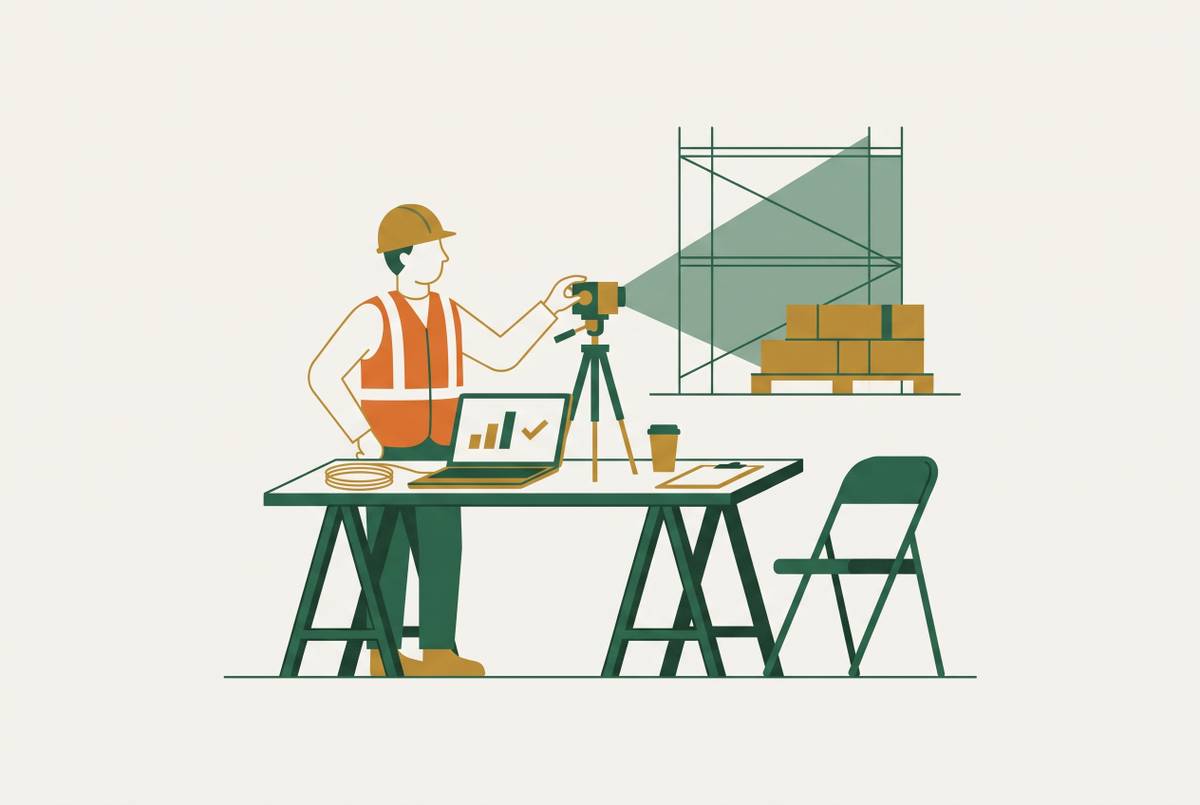
AI agents introduce a different vantage point by working across the boundaries that constrained earlier tools. When used for value-stream mapping, they can work with project management data, field reports, and equipment telematics together. That combined evidence reveals where time is lost, where crews wait, and where materials are handled unnecessarily. The diagnostic function comes before the prescriptive one. Before changing a workflow, the organization gains a more complete and objective picture of how it actually runs than a workshop based on recollection alone can provide.
It also describes systems orchestrating end-to-end tasks by planning steps, interacting with software tools, and routing work to humans for verification. For diagnosis, the important distinction is their reach. They can work across the gaps between point solutions and show links that no single tool was tasked with checking.
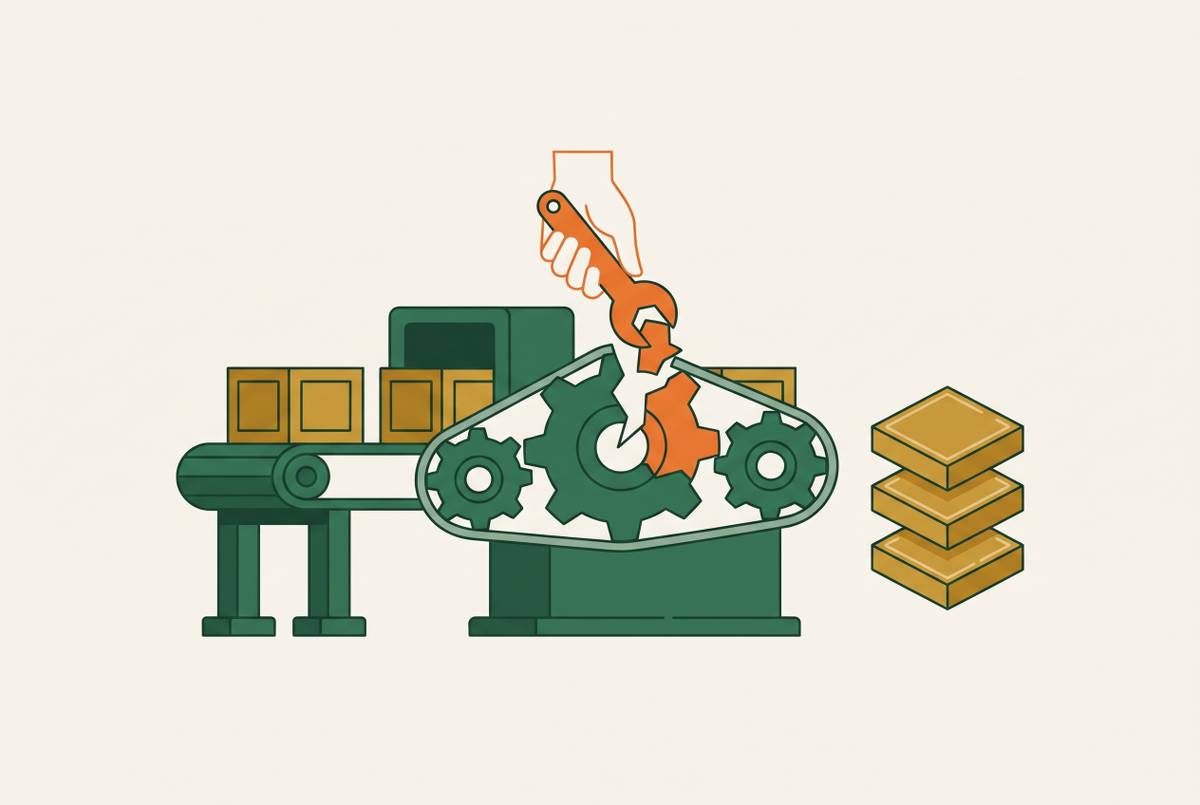
Stanford Digital Economy Lab’s Enterprise AI Playbook 2026 describes a semiconductor manufacturer whose product specifications, test libraries, data sheets, and engineering logs were kept in separate repositories that different teams owned. The team built a multi-agent framework for its field service bottleneck. Relevant information existed, but the process depended on people connecting it across organizational and technical boundaries. An agent helps diagnose the process by showing where it relies on people to piece information together, so the rebuild can tackle why they had to do that for each case.
The gap between declared process and field reality, and what it costs
The gap becomes concrete when a declared operating standard is compared with actual output. Sysdyne Technologies’ 2026 report shows that tolerance improved after eight ready-mix concrete plants began using BatchGo AI. Before the plants began using it, batching ran over tolerance on a large share of loads, adding to material cost on every shift. The standard existed, but output diverged from it. That distinction separates a documented process from an operationally controlled one.
Scheduling drivers at the same plants brought another kind of hidden cost to light. An experienced planner spent multiple hours cross-referencing confirmed orders, driver availability, PTO schedules, plant capacity, and route logic. The task looked like scheduling, but its architecture depended on a person reconciling information from several sources. That knowledge could not be systemized until AI was built into the platform. The labor was therefore not just time spent making decisions, but time spent assembling the conditions under which a decision could be made.
In construction, the equivalent gap appears at handoffs between contractors and functions. Schedule risk and subcontract performance offer main contractors a direct view into the interface failures behind much of their cost. Procurement makes the divergence especially visible. Early deliveries clog the site, late deliveries stop work, and purchase orders, deliveries, and invoices routinely fail to match before AI procurement tools are applied. A schedule may declare when work should begin, but the crew still cannot proceed when the materials needed for that work have not arrived.
Why automating a broken process accelerates the damage rather than fixing it
An agent operating on a broken process acts on the same faulty assumptions at a frequency and scale beyond a human operator’s capacity. In a multi-step workflow, reliability is the product of the reliability of each step, rather than a value that drops by a fixed amount at each step. Even when each action is reliable, the end-to-end result can be much less so. More activity is not evidence of a sounder process.
The Agentic Company OS paper, accepted at AGENTICS 2026, identifies five recurring enterprise agentic failure modes. Governance gaps allow agents to act outside policy, while transparency gaps prevent reviewers from reconstructing their actions. Coordination gaps leave agents out of step with one another, and safety gaps allow untrusted content to contaminate trusted reasoning. Plateaued improvement describes deployments that stop getting better despite model upgrades. These failures show why a stronger model cannot, by itself, repair an architecture that lacks workable boundaries, coordination, or accountability.
Daewoo’s contract specification review problem illustrates the risk of putting a general model into a mission-critical process. A generative model trained on general web data can give wrong answers that sound right as well as miss details. Those errors are expensive to discover after the fact. Necessary human checkpoints can catch individual mistakes while leaving intact the process that systematically generates them, and their burden grows as deployment broadens.
A patch adds review to the workflow already in place. A rebuild examines whether its assumptions, dependencies, and decision points should exist in their present form at all.
What a process audit actually uncovers before any agent is deployed
A genuine process audit produces a map of the decisions that govern how work moves, including decisions nobody formally made. It identifies where institutional knowledge lives in one person, where handoffs depend on informal communication that never enters a system, and where the declared trigger for an action differs from the trigger used in practice. These are not merely documentation gaps. These gaps leave an agent with an incomplete account of the work and limit its ability to act on the available evidence.
In construction, that examination shows which schedule risk is visible in P6 and which lies in procurement lead times, coordination gaps, and commissioning dependencies. The schedule records intent, which can diverge from achievability. An audit establishes where those two diverge by observing the live process rather than treating the plan as a sufficient description. This gives the rebuild a concrete object. The task is no longer to improve scheduling in general, but to address the specific dependency that makes the schedule unreliable.
In practice, the audit begins with a specific, painful process. Visible symptoms provide a route to the architectural assumption that needs to change. Waiting crews, repeated manual reconciliation, and dependence on one experienced planner each direct attention to a different part of the workflow. The audit is therefore neither a best-practice gap analysis nor a requirements-gathering phase for software implementation. It treats current work as field evidence and establishes what must change before an agent is given responsibility within it.
That timing is essential even when agents can support diagnosis. Cross-system analysis can reveal a process fault without justifying immediate operational action. The organization still has to establish whether the underlying records are trustworthy enough to support the rebuilt workflow.
How to rebuild a department workflow with AI agents from the floor up
Rebuilding starts with using what the audit found to change one process with clear limits. The organizations that moved toward genuinely AI-first operations began with a specific workflow and produced a live first result that supplied evidence for extending the approach. They did not begin with a broad transformation roadmap. The distinction is between changing the architecture of an identifiable piece of work and adding technology across an unchanged department.
Autodesk’s 2026 expert panel places the largest impact in everyday project management and field operations when AI becomes a built-in function. That framing makes the architectural test concrete. A built-in workflow addresses the connections needed to perform the work, while a bolted-on tool leaves people responsible for bridging the old gaps. The ready-mix scheduling task required reconciling orders, people, plant capacity, and routes.
A live first result in weeks signals a bounded scope. The purpose of that first result is to create operational evidence for the next step. A program measured only by a long software implementation can defer the more important question of whether the process itself has changed. Speed to a live result is useful because it brings that question into contact with actual work.
The constraint remains the quality of the evidence underneath the workflow. Agents inherit broken data before they can help redesign broken processes, so the audit must establish both what needs rebuilding and whether the available data can support it. Skipping that reckoning is precisely how an apparent transformation becomes another pilot that cannot move into production.