Where Construction Workflow Mapping Breaks Down Before You Reach the Platform Demo
Auditing real field work first exposes the hidden failures a demo can't.
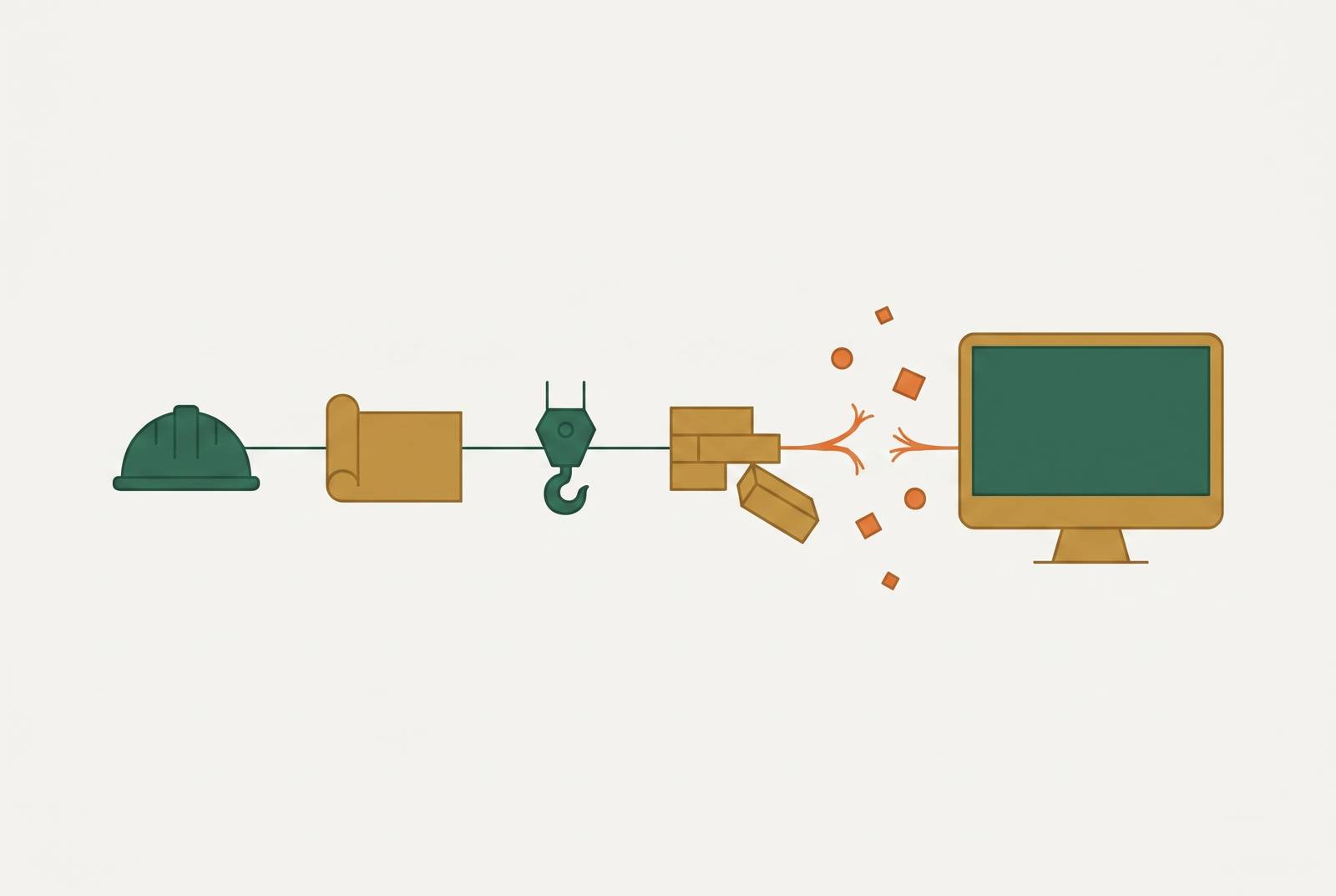
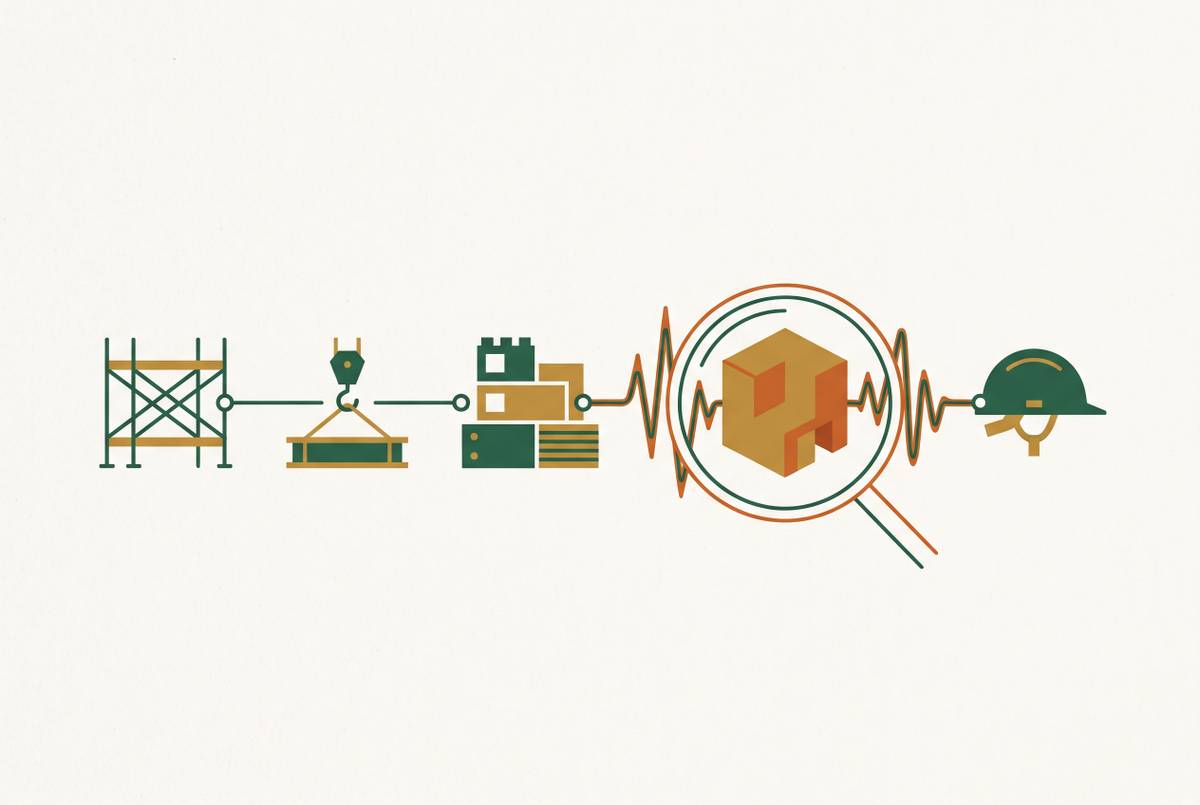
Construction workflow mapping breaks down before the platform demo when teams fail to document how work actually moves through the project. A process audit before AI deployment in construction and logistics operations must expose ownership gaps, broken hand-offs, sequencing conflicts, and field data constraints before software is evaluated. The audit begins by mapping a specific, painful process against actual work.
Why construction teams arrive at software demos with broken processes they cannot see
A construction project can have a project manager, a schedule, weekly meetings, and a full report stack and still run badly. From the outside, the management structure looks complete. Inside the project, however, work may move through habits that have never been mapped, with approvals, document routing, and hand-offs dependent on assumptions about who acts next. Those habits can stay hidden behind regular reports because the reports show progress without always explaining how the work gets done. Visible management is not evidence of a defined workflow.
The distinction begins with the schedule itself. A schedule describes when work happens, while a workflow describes how it happens. The schedule presupposes that documents reach the right people, approvals arrive in sequence, and the field has what it needs to proceed. It does not contain those arrangements merely because it assigns dates to activities. When teams treat scheduling as workflow mapping, they leave the mechanisms behind those dates unexamined.
A vendor can demonstrate routing, task assignment, and reporting, but the team has no documented account against which to judge those capabilities. The discussion therefore evaluates features against an assumed process. The loss of control has already occurred upstream, in the audit phase, where intended work should have been compared with actual work.
The discipline the audit phase is supposed to perform — and why it is routinely skipped
A proper workflow audit documents how work happens today against the project team’s account of how it should happen. That distinction determines what the audit can reveal. If it records only the approved procedure, it reproduces the assumptions that already govern the project. If it follows actual work, it can identify the waiting, duplicate effort, and unresolved hand-offs that the procedure leaves out.
Value Stream Mapping is the standard tool for this stage. It classifies tasks as value-added, non-value-added, or necessary non-value-added, separating work that contributes value from waste and from required supporting activity. Without them, a team can automate a task without asking whether that task belongs in the process at all. The team then does the task faster instead of fixing what made it faulty in the first place.
Field conversations are essential to that distinction. Site supervisors need to describe what actually slows them down, rather than merely respond to the project manager’s account of the problem. In the illustrative reporting case, the declared bottleneck was the daily reporting form, but the actual constraint was unreliable site Wi-Fi that prevented supervisors from submitting it. The form was not the central problem. An audit confined to the declared complaint would have framed the wrong requirement for the demo.
The audit is effectively skipped when those assumptions pass for evidence, even if a process document exists. A schedule, an approved procedure, and a manager’s explanation can give the team a sense that the workflow is already understood. Yet none establishes what happens at the field level. A shallow audit thus leaves faults in the process untouched while making the team seem ready to choose software.
Five structural breakdown points that an audit must expose — and that a demo never will
The first breakdown is the procurement-to-schedule split. The schedule assumes that a work area is ready, and the field team organizes labor around it, even though steel detail coordination, MEP routing conflicts, site utility crossings, or equipment selection remain unresolved. Procurement sits on one log and field work on another, with neither showing the relationship between an item marked “in process” and installation readiness. Long-lead items such as switchgear, curtain wall systems, and specialty fixtures may be ordered late because their lead times were not flagged during preconstruction. A critical-path stockout can then trigger weeks of resequencing across trades. The schedule reveals the damage. A demo cannot establish readiness relationships that the team has never defined.
The second breakdown is ambiguous ownership across approvals and obligations. Change orders can need several signatures before work goes ahead, while payment holds can keep subcontractors from mobilizing. When no one is clearly responsible, everyone may think someone else is tracking the open item. The audit reveals that the team lacks a recorded account of who must act and who owns the unresolved obligation. A demo can show how to assign an owner, but it cannot reveal an undeclared absence of assignment discipline.
The third breakdown is closeout treated as an afterthought. Its symptoms become difficult to conceal at turnover, when the package is thin, startup support is unresolved, record drawings are late, and warranties are scattered. Owner training may have been left as something that would organize itself at the end. These problems expose a workflow that failed to plan closeout during preconstruction and deferred its requirements until mechanical completion. A demonstration of closeout features cannot recover the planning that should have preceded the work.
The fourth breakdown is disconnected document control and data capture. Field crews may work from a printed drawing set two revisions old because the update to the cloud folder never reached the trailer. At the same time, duplicate entry across scheduling software, accounting, and a paper daily log leaves the team without one accurate picture. The information exists, but its movement is broken. An audit must follow how it reaches field execution and how field records return to the project’s systems. A demo displays clean data inside a platform.
The fifth breakdown is an undefined turnaround and escalation workflow. Unanswered RFIs can lead crews to work around unresolved questions, creating rework risk, while the visible symptom may be schedule slippage. The deeper finding is that the process never established turnaround ownership or escalation triggers. That is distinct from merely naming an owner. The workflow must also define how an unresolved question moves when the expected response does not arrive. Software can show status, but a demo cannot fill in missing rules for moving the work forward.
None of these failures requires a platform to fix. Each needs an audit first to spell out the missing link, who is responsible, or what rule is needed.
What Location-Based Work Sampling reveals that declared process maps cannot
Location-Based Work Sampling brings direct observation of the work into the audit. It examines worker activity by zone, producing field evidence about where different kinds of activity accumulate. The method uses separate heat maps for production, preparation, walking and transportation, and waiting and talking. Location makes the workflow visible in another way.
LBWS studies find excessive walking and waiting concentrated in a handful of congested zones. A map may describe the intended sequence of work without showing where site layout and congestion interfere with it. Interviews can tell the team what people find difficult, while observation shows what they do where the work takes place.
The audit therefore needs more than documented intent. The declared map describes the expected workflow, while the observational output describes what happens in the field. The gap between them can expose non-productive time that document review and interviews miss. Teams that omit this evidence may still proceed to platform demos, but the demonstration cannot recreate the field observation that never took place.
How skipping the audit produces faster versions of broken processes when software is deployed
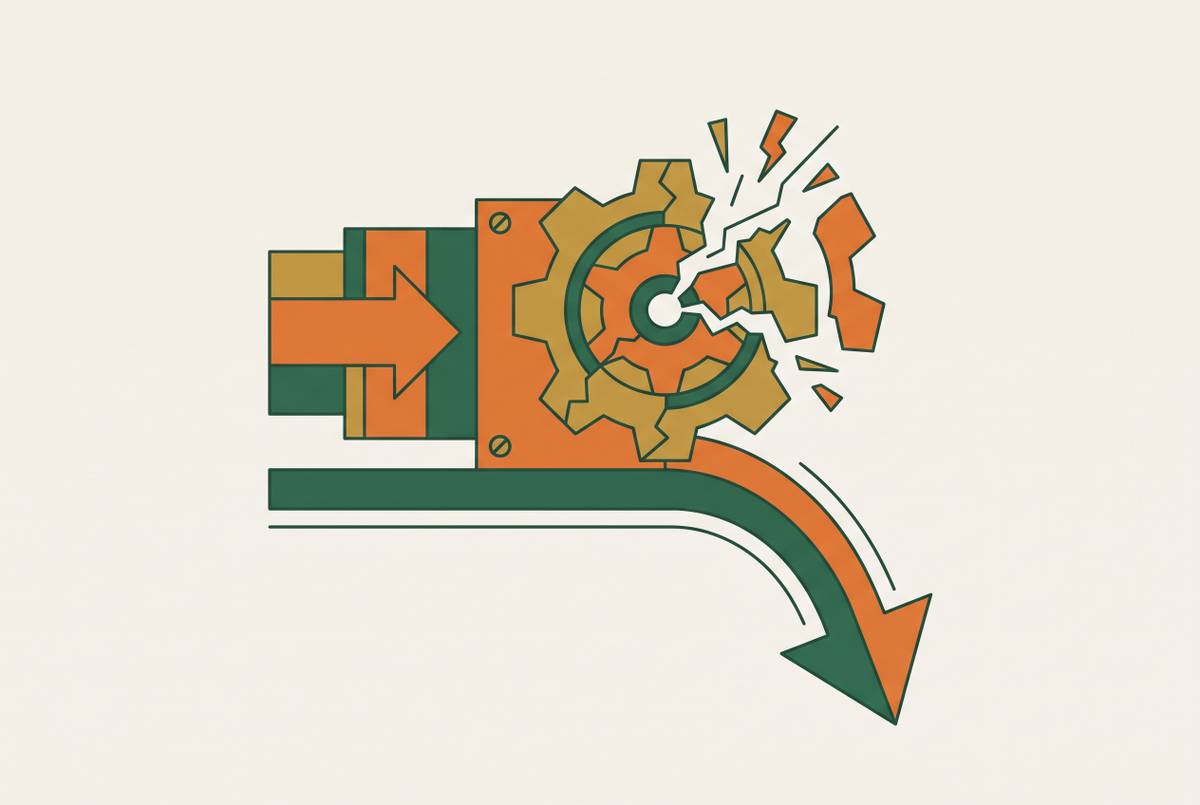
When teams move directly from a perceived problem to implementation, the platform inherits the process they have failed to examine. Software may accelerate routing or reporting while leaving the underlying dependencies unresolved. In the illustrative implementation pattern, teams buy software, complete training, and then see field teams return to workarounds within weeks because the workflow underneath remains unworkable. Training addresses use of the tool.
The lean-plus-digital combination depends on addressing that human layer first. Someone must decide what work belongs in the process, who owns it, and how it moves from one person to the next. Software executes those arrangements. It does not design them. If a team has not resolved approval responsibility or procurement readiness, introducing a platform does not itself settle either question. Deployment makes the unresolved process more visible without necessarily making it more coherent.
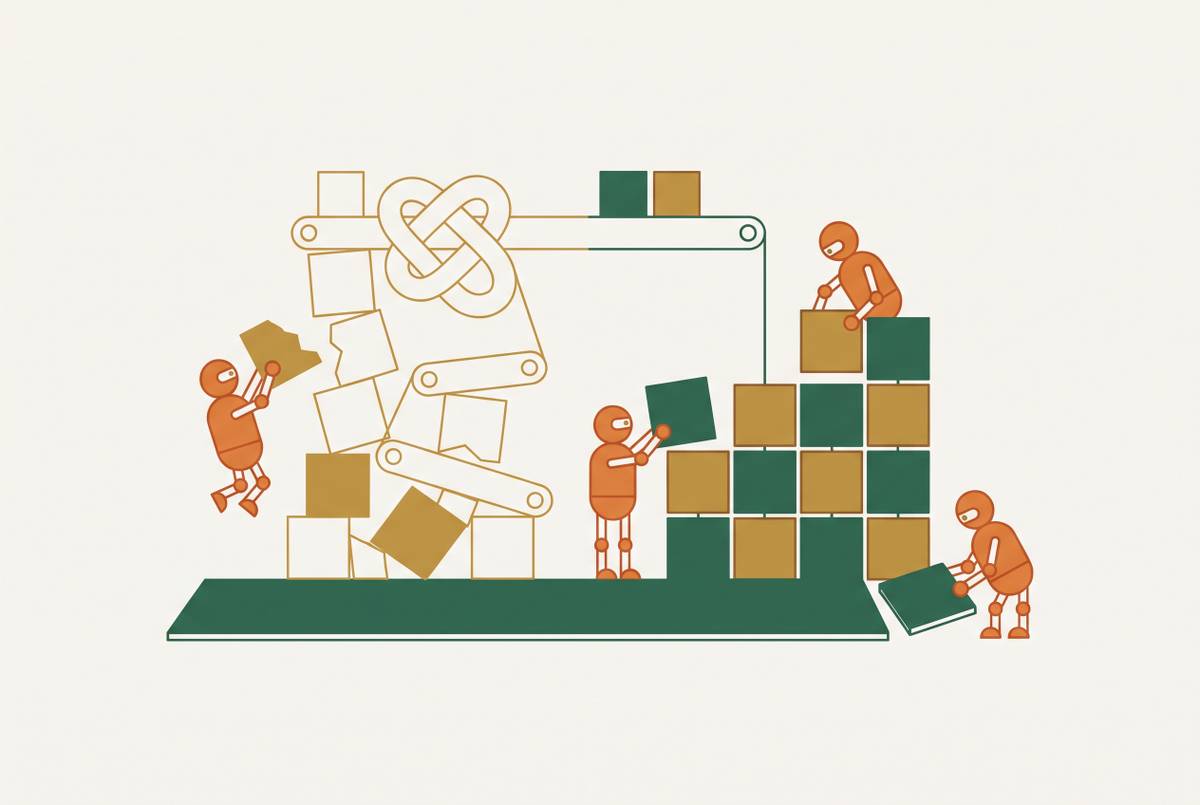
AI agents extend the same failure pattern. An agent applied to a poorly understood process can automate the confusion, and missing process documentation before agent development is a core failure condition. This is the downstream consequence of asking automation to operate within a workflow whose rules and gaps remain undeclared. The audit must precede agent design rather than run beside it as unfinished background work.
Production uses of agentic AI in construction are currently narrow, including drafting RFIs, first-pass submittal review, tender and bid analysis, daily logs, and schedule risk detection. Each depends on an underlying workflow that has been mapped and cleaned first. A useful output does not settle an undefined review route or resolve the physical conditions that obstruct field reporting. The same distinction applies to conventional software. The demo can show what a tool does, but it is structurally incapable of detecting project conditions and missing rules that the audit has not surfaced.
What should a team audit before entering a platform or AI conversation?
Documented evidence of how a specific, painful process runs today provides the basis for the audit. Before any platform conversation, a team should establish who approves what, what requires design review rather than owner review, and how submittals are classified and routed. The same account must explain how RFIs, changes, and payment reviews move through the team and which documents govern work in the field. These are preconstruction decisions. If they remain unanswered before mobilization, workflow becomes dependent on personalities.
Ownership must then be assigned and recorded in the project management system for every regulatory and workflow obligation. A role title is not enough. Nor is a separate spreadsheet a substitute for recording responsibility where the project is managed. The audit must also establish turnaround ownership and escalation triggers so that an open item has a defined route beyond its initial assignment.
Procurement must be linked just as clearly to the order of work in the field. The audit must expose items described as “in process” without a defined connection to installation readiness, rather than accept a parallel procurement log as sufficient evidence. Closeout needs the same early discipline. A turnover package outline should exist before the first material is ordered, with requirements planned during preconstruction.
The audit needs to account for the physical conditions under which crews collect and submit information, including constraints such as the unreliable connectivity in the reporting example. Office-ready systems do not prove field-ready data capture.
The final test is one of sequence. If the team cannot answer these questions from documented evidence before the demo, the right response is to close the audit gap first. For AI-first process redesign, that means mapping the painful process and understanding where it fails before designing an agent around it. The platform conversation can then address a defined operational need instead of being asked to discover a process the team cannot yet describe.