Fixing One Manufacturing Workflow With AI Before the Software Vendors Get in the Room
Map how one plant workflow really runs, then target its costliest gap.
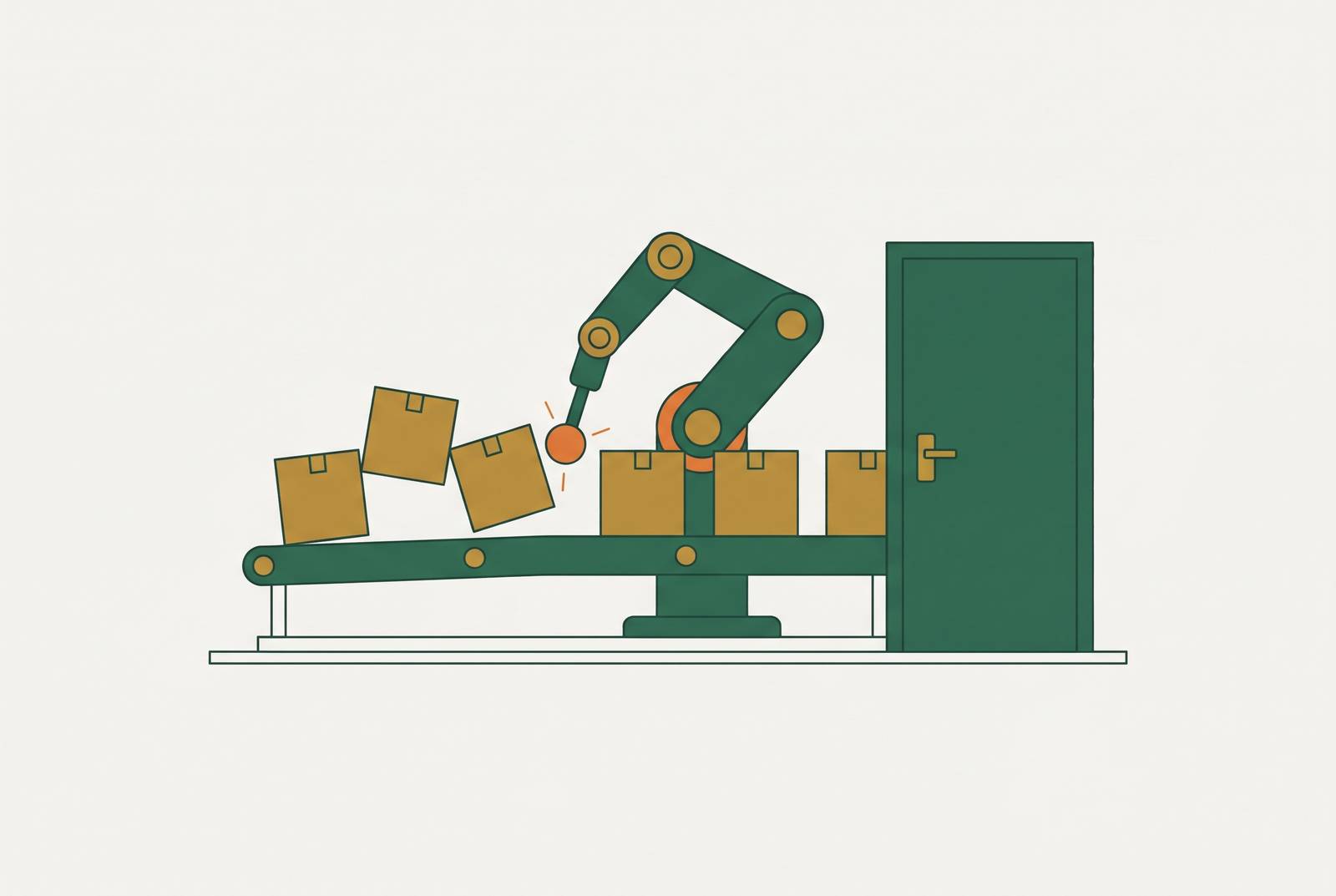
Manufacturers can use AI to fix one broken plant workflow without buying a whole platform by first mapping how the work actually runs, then targeting one costly gap between a signal and a decision. Defining that gap independently keeps what must change in the workflow, rather than a product’s capabilities, in control of the project.
Why manufacturers lose control of AI projects before they start
Factories that plugged electric motors into steam-era layouts captured little of the potential productivity gain. The gains came when manufacturers redesigned their systems around the new capability. The distinction was not simply the power source. It was the organization of work around it. AI presents the same sequencing problem when manufacturers add intelligence to a process without examining the approvals, handoffs, and decisions that determine its output.
That error can begin before any technology is selected. Manufacturers who wait for a vendor to map the problem allow product fit to become the starting point for diagnosis. Vendors sell configured solutions, so discovery naturally concentrates on problems those solutions can address. The pitch cycle rewards finding a fit over taking the time to look into every informal fix that keeps production moving.
The manufacturer also shapes what discovery can reveal. A team that describes the approved process gives the vendor a coherent account, but may leave out the workarounds responsible for its real cost. The resulting proposal can be technically sound against that incomplete description. It solves the problem that reached the room. Manufacturers can thus lose control both by making a poor purchase and by failing, before they buy, to decide what that purchase must change.
What "the workflow as it actually runs" means, versus what gets described in a discovery call
The process people describe usually follows the approved order of work. A quality flag appears, the appropriate person reviews it, and a decision follows. The actual sequence depends on who is available, what information they can reach, and which decisions they have authority to make. Those conditions rarely fit neatly into the approved account. On a Friday afternoon shift, the quality engineer may be off-site.
An operator’s account of that situation reveals the workaround layer. It shows who receives the flag, what happens while a decision is pending, and whether the eventual judgment becomes part of the record. The exception is part of the process. If it relies on an informal handoff or an unrecorded decision, the formal description leaves out how the work gets done. It also does not explain where the delay or reconciliation effort enters.
Digitization does not necessarily remove that gap. Many manufacturers have changed the systems they use to do the work while keeping the same hierarchies, approval sequences, and boundaries between departments. Data then remains fragmented, delayed, and manually reconciled despite the presence of digital records. The fragmentation is less visible in a system description than in the effort required to execute the job. A discovery call can therefore cover every formal stage while missing the links that make those stages work.
How to map one specific, painful workflow before anyone else defines it for you
To close that gap, start with the process causing the most operational pain. Pain shows where the work falls short of what it is supposed to achieve. Keep the scope to one workflow with a recurring failure.
Walk that workflow physically or chronologically from its trigger to its output. Identify who touches it and what information each person consumes and produces. Record where judgment substitutes for a missing signal, particularly when that judgment leaves no record. Follow the output to its destination. Note its form. A handoff is not fully described by naming the receiving department if someone must first copy, interpret, or reconcile the information.
The most revealing questions concern the manual bridges. Identify where someone copies data between systems, where a decision is made without a record, and where a delay compounds downstream. For the Friday quality flag, the relevant details are how the work proceeds before an engineer reviews it and how the decision reaches the people who need it. Those details distinguish an executable workflow from a statement of intent.
Compare what the workflow actually produces with what it is supposed to produce. That gap sets out what AI must help improve. Include the plant-specific conditions that shape the result, including machine quirks, operator experience, maintenance histories, supplier delays, and quality thresholds. A generic model cannot supply this operational understanding on its own. The useful output is not a flowchart alone, but a concrete account of the data signals, decision points, and failed handoffs an AI agent would need to address.
Which workflows break first and why — the patterns that show up repeatedly in manufacturing
Predictive maintenance exposes the gap between detecting a condition and authorizing a response. Most plants have sensor data. The break lies between an alert and a work order, where someone must decide who acts, when, and on what authority. BMW Group used AI at its Regensburg plant to analyze fault patterns, saving more than 500 minutes of annual production disruption. Its intervention centered on recognizing fault patterns, which makes the route from evidence to maintenance action the relevant mapping target.
Quality control exposes a different timing failure. Manual inspection is slow and inconsistent, and defect information can arrive too late to prevent the next occurrence. Beko used a smart machine-learning-powered control system in sheet metal forming to adjust parameters in real time, cutting scrap and saving a large amount on materials. Detection moved from finished-part inspection to process conditions earlier in the workflow. That change makes the connection between quality information and operational decisions central, including the disconnections from maintenance and scheduling data.
Replenishment breaks when a prediction cannot trigger action. A forecast may show a stock shortfall while a person still has to read a report and arrange the response. Mengniu Dairy used AI to automate supplier order scheduling and vehicle dispatching, increasing inventory turnover substantially and improving operational efficiency. For manufacturers assessing a similar workflow, the question is where the signal stops and the manual relay begins.
A signal is there, but someone must bridge the gap between departments or systems before a decision can be made. That bridge is the candidate intervention point. Its suitability depends on whether the map can expose the required information, the decision, and the authority to act.
What AI actually costs a workflow that is not ready for it
AI amplifies the conditions already present in a workflow. Poor data can lead to wrong outputs in large numbers, while automation makes those outputs seem trustworthy. A process that once gave a wrong answer now and then can give wrong answers in large numbers, making it harder to recover. Faster execution is therefore not evidence that the underlying workflow has improved.
Verification changes the economics of the intervention. An AI system may reduce the effort needed to produce an initial output while increasing the work required to inspect exceptions and recover from errors. Those costs belong in the evaluation of the redesigned workflow. A narrow task that looks efficient at its first output may be expensive across the full sequence of work.
The human backstop also changes when AI takes over judgment. Skills can erode when people no longer perform the decisions they are expected to oversee, leaving them less reliable when an unusual output demands intervention. More agents do not automatically solve this problem. Multi-agent coordination can fail because of how orchestration and the workflow are designed, even when the model itself works better in a single-agent setup. Making the setup more complex can thus add another way for it to fail while leaving the decision it should support unclear.
Walmart’s item-mapping feature in the Spark app illustrates the cost of a workflow change at ground level. The deployment slowed some delivery workers down and, in their accounts, reduced effective hourly earnings. AI-assisted changes need testing in the work itself before full rollout, particularly where throughput determines income. Measuring an improvement away from the work itself can miss the cost to the person doing the task.
How to use AI to fix one plant workflow without buying a whole platform
The practical response is to establish an independent standard before selecting a tool. Choose a recurring failure with a traceable cost, rather than the most complex process or the initiative most visible to leadership. A daily manual bridge across a data gap is a stronger starting point than a broad strategic ambition. The initial goal is a defensible diagnosis. Building an AI system before that diagnosis would repeat the sequencing error.
Use the completed workflow audit to isolate one intervention point. It should connect a signal already available to a decision that currently depends on a human relay. Adjacent problems visible across the whole workflow help explain the operating conditions for a first deployment with a limited target. Scope remains credible when the proposed change has a specific gap to close.
Put the diagnosis on one page. Describe the workflow, its break point, the data already available, and the decision the AI needs to support. Use the gap between what the workflow produces and what it should produce to decide how to judge the change, including the work needed for verification, exception handling, and recovery. The document is the operational standard against which any proposed solution must make its case.
With the intervention defined, keep the first deployment narrow enough to go live in weeks. A workflow requiring quarters to stand up is either too broad or attached to a transformation program that has displaced the original operational problem. Test the change at ground level before extending it. Disciplined, incremental modernization gives the first live process a practical purpose, proving the method and building organizational trust.
The manufacturer has defined the break, identified the usable signals, and established what successful execution must look like. Product capabilities can then be evaluated against operational evidence, reducing the risk that a persuasive demonstration becomes the architecture for automating a broken process.
The organizational condition that determines whether the first AI workflow holds or reverts
A well-mapped AI workflow can still revert if the surrounding approval structure remains unchanged. The organizational constraint is that intelligence still has to wait at the boundary between departments if nobody has the authority to act on it. Removing it requires clarity about who acts, whether the action is recorded, and whether the outcome feeds back into the system.
That clarity must include the people whose judgment AI has displaced. Their roles in oversight and exception handling need definition, or the workflow loses its human backstop without replacing it. Accountability must also be visible in the operational record. A leader asking what happened last Tuesday needs an answer from the workflow. If the system cannot answer, it is not audit-ready.
Early pilots will run into messy data and resistance. Those difficulties are survivable when each success builds operational context, stronger data habits, and trust in the revised process. This is where the advantage begins to compound. Manufacturers gain more than a customized tool when they use that knowledge to redesign how work happens around their capabilities. The first AI workflow is proof that they can make that redesign hold, and a foundation for the next one.