Manufacturing Shift Handoff Failures Exposed by AI Audits
AI audits reveal five recurring ways shift handoffs lose critical context.
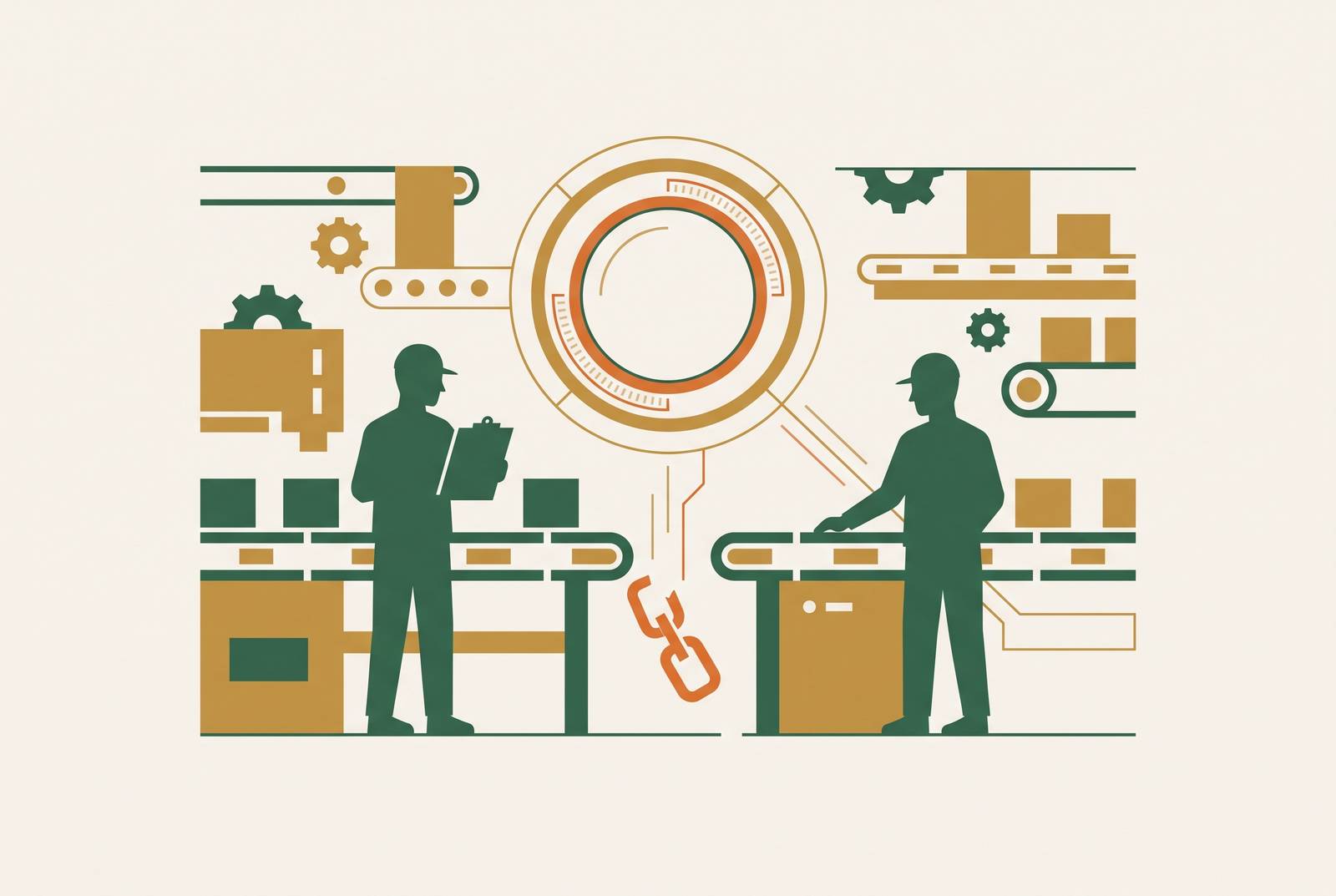
The shift handoff is where continuous manufacturing concentrates the most operational risk into the least time, and it fails in ways that are now predictable enough to audit. AI audits are surfacing precisely what verbal and paper-based handoffs have hidden for decades: the specific information losses, coordination gaps, and process breakdowns that recur every shift. The findings give operations leaders a basis for rebuilding the handoff rather than patching it. The most concentrated failure point is also the most measurable one, which makes it the right place to start AI-first process redesign.
Why shift handoffs are manufacturing's most concentrated failure point
The shift handoff concentrates more operational risk into less time than any other recurring event in continuous manufacturing. It is the moment when accumulated context from one shift must transfer completely to another, and it happens under conditions designed to make that transfer fail. Operators are ready to leave, incoming supervisors are simultaneously managing safety checks and team briefings, and the entire exchange is compressed into a few minutes of informal communication. The handoff is not one of many vulnerable moments in a plant. It is the single point where context either survives or decays.
The mechanism is structural rather than behavioral. The handoff asks humans to transfer information at high fidelity under time pressure, parallel demands, and no structured format, so it degrades regardless of operator competence or intent. This is not a question of effort or culture. The failure is built into the architecture of the process itself.
The consequences are documented across decades of industrial disasters. Piper Alpha, BP Texas City, and Esso Longford all had shift handover communication failures as contributing causes. At Longford, poor communication between shifts meant a pump shutdown was not communicated to the following shift. At Texas City, shift handovers were rushed and vague, or did not happen at all. These events establish that the handoff is not a throughput problem alone. It is a safety-critical structural gap that has persisted across facility types, production volumes, and regulatory regimes.
The five failure modes that verbal and paper-based handoffs produce reliably
Verbal and paper-based handoffs do not fail randomly. They fail in the same five ways, every shift, across facility types and production volumes. Each failure mode is a concrete mechanism, not a category, and each is observable in the pattern of what gets lost between one shift and the next.
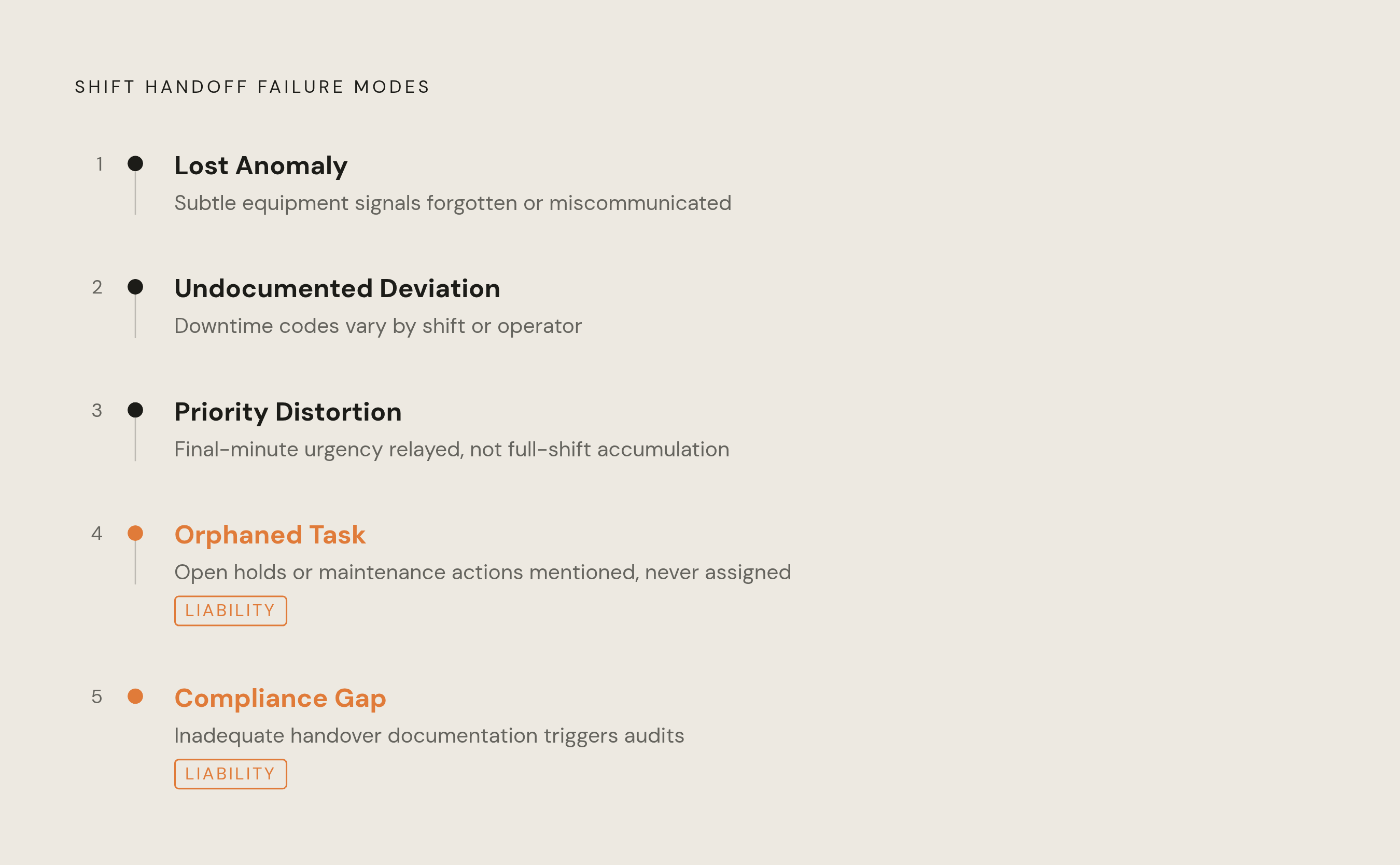
The first failure mode is the lost anomaly. A machine's subtle vibration anomaly noted by the outgoing shift may be forgotten or miscommunicated, leading to a catastrophic failure hours later, with downstream costs extending to lost production, overtime labor, and expedited shipping. The information existed at the handoff. It did not survive it.
The second is the undocumented deviation. Downtime codes vary by shift or by operator, so the same event is recorded differently depending on who enters it, making cross-shift pattern analysis unreliable. The third is the priority distortion, where the outgoing supervisor relays what seemed urgent in the final minutes rather than what accumulated across the entire shift. The fourth is the orphaned task, where an open quality hold or maintenance action is mentioned but not assigned, so it sits unresolved until someone rediscovers it. The fifth is the compliance gap, where inadequate handover documentation in regulated industries such as pharmaceuticals and aerospace results in violations and costly audits, making the failure simultaneously operational and regulatory.
The cumulative effect lands on OEE. Facilities unknowingly leave millions in potential savings unrealized because the handoff gap prevents trend analysis and blocks identification of recurring issues. These patterns are consistent enough to be predictable, and that consistency is precisely what makes them auditable.
What AI audits actually surface that manual review misses
An AI audit surfaces the gap between what the handoff declared and what the operation actually recorded. That distinction is one a human review, operating on the same incomplete data, cannot make. The audit does not ask what the outgoing supervisor said. It compares that statement against the full data record of the shift and identifies where the two diverge.
The mechanism moves from passive documentation to active pattern recognition. AI-powered systems analyze machine data, operator logs, and environmental conditions to identify what the shift actually produced, what it stopped for, and what it flagged. Natural language processing parses free-text operator notes, extracting machine IDs, fault codes, and timestamps, then links them to real-time sensor data. The result is a contextual record that captures not just what occurred but why it matters. Machine learning models applied to handover reports detect anomalies such as an unusually high number of minor stops and flag them for investigation, identifying patterns that no individual supervisor would notice across a week or month of shifts.
The structural advantage is that an AI audit operates on the full data record simultaneously. It reads MES, CMMS, SCADA, quality management system, and incident logs as a single corpus, while a verbal handoff operates only on what one person remembers and chooses to say. What this exposes is not operator failure but process architecture failure. The handoff was never designed to capture what the data shows was actually happening.
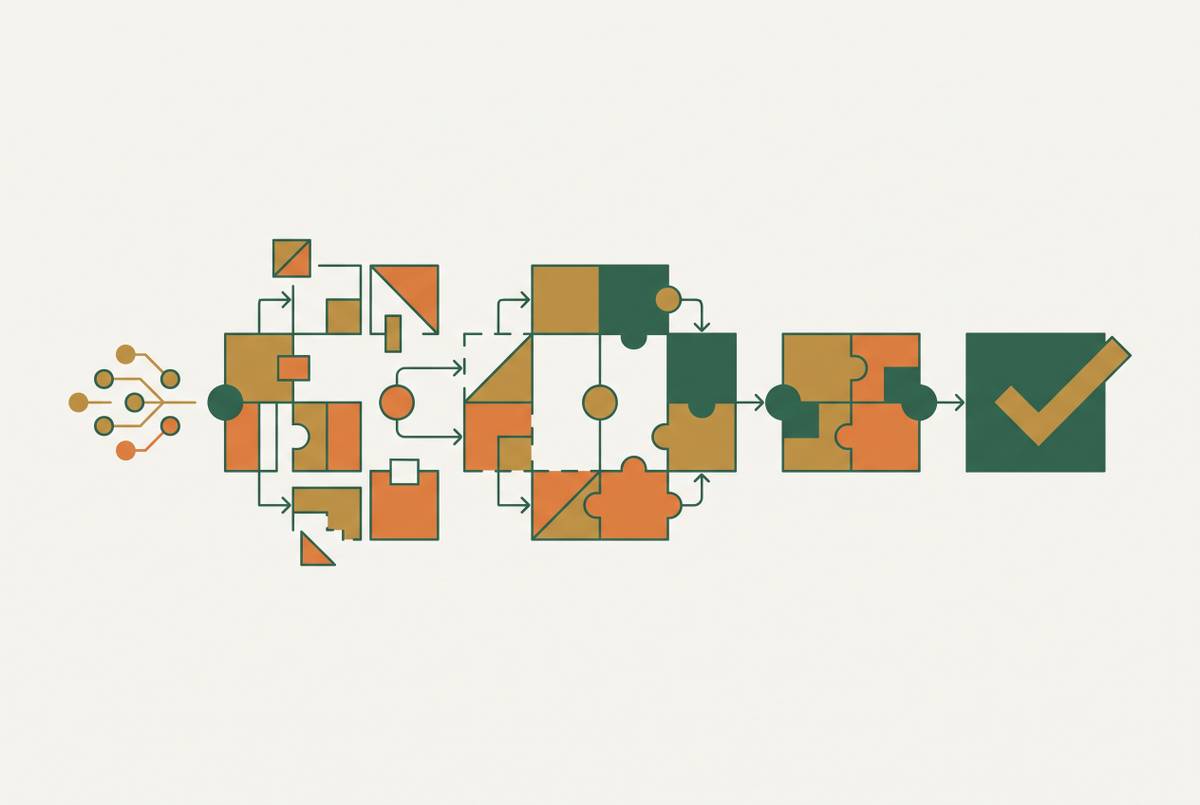
The real output of an AI audit is therefore not a report. It is a map of what a rebuilt handoff needs to capture and automate. The audit reveals the gap between declared and actual, and that gap becomes the specification for a redesigned process. Terminal Use treats the audit results themselves as the specification for the first live process: rather than layering an AI system on top of existing workflows as an analysis layer, it embeds agents directly into the workflow to execute the handoff in real time, structured and complete, from first shift.
Why data infrastructure breaks before the AI audit can deliver
The most common AI audit failure is not an algorithm problem. It is a data infrastructure problem that existed long before AI was introduced, and the audit itself is what exposes it. Most plants run an ERP, an MES, a CMMS, a QMS, and often a WMS. Each system does its job, but they rarely talk to each other automatically. The handoff data that an AI audit needs is scattered across these siloed systems, and the audit cannot assemble what the infrastructure never connected.
The specific data quality failures that block handoff audits are well defined. Timestamps drawn from backflush rather than true start events distort the timeline of what happened during a shift. Downtime codes that vary by shift or by operator make cross-shift pattern analysis unreliable. Routings that drift without system updates mean the AI is auditing against a plan that no longer reflects how the line actually runs. Quality events not tied to specific lots or parameters break the traceability chain the audit depends on.
The practical consequence appears when auditors arrive. The reporting burden explodes from a daily annoyance into a multi-day emergency that pulls the most experienced people off the floor, because the underlying data was never structured for retrieval. The objection that an MES means the data is already there fails on a basic distinction: data existence and data quality are different problems. An MES with inconsistent entry practices produces an audit trail that is technically complete and operationally misleading.
The implication is that an AI audit of a broken data infrastructure does not reveal what the handoff lost. It reveals that the infrastructure cannot answer the question. That finding is itself the output operations leaders need, because it makes the gap legible and specific rather than general and unactionable.
What a structured AI-generated handoff captures that a verbal one cannot
When data infrastructure is sufficient, AI-generated handoff reports capture a class of operational information that verbal and paper-based handoffs structurally cannot. Not because they try harder, but because they operate on a different data foundation. The automated report draws from live systems at shift close and assembles a record no single operator could compile manually.
The data sources a complete automated handoff connects are specific and enumerable. From the MES or production system, it reads units produced, defect counts, and downtime events via API at shift close. From the ERP or work order system, it queries open production orders and material availability at report generation. From the maintenance ticketing system, it pulls open tickets, equipment status, and parts on order via API or webhook. From the quality management system, it queries active holds, non-conformances, and inspection results at shift close. From the operator incident log, it aggregates safety events, near-misses, and manual notes automatically from form-based input.
The structural difference is that the automated report captures what happened across the entire shift, not what the outgoing supervisor chose to prioritize in the final minutes. Systematic issues that accumulated gradually, the pattern verbal handoffs most reliably lose, appear because the data record is complete. The system also tailors the summary by role. The incoming supervisor gets a different cut than the maintenance team or the quality manager, so each recipient receives the context relevant to their first decisions rather than a generic dump of everything.
In regulated manufacturing, the automated handoff becomes the foundation of batch genealogy. Process parameters, raw material lot numbers, equipment IDs, and operator actions are captured from PLCs, scales, and MES automatically, eliminating manual logbooks that introduce errors and creating full forward and backward traceability. Manual report compilation consumes substantial skilled supervisor time per week, time spent formatting data rather than improving operations. Automated handoffs return that capacity to the floor.
Why most plants cannot yet act on what their AI audits find
Surfacing the handoff failure through an AI audit is not the hard part. The hard part is that most plants' operating models are structured to absorb and normalize the failure rather than address it. The audit produces a finding, and the organization has no mechanism for holding that finding open long enough to act on it.
The governance gap compounds the operational one. Without standardized data capture, trend analysis becomes impossible, so recurring issues cannot be identified and improvement initiatives cannot be measured. The audit surfaces the pattern, but without structured capture the finding dissipates shift by shift. The accountability gap is equally structural. Verbal handovers leave no audit trail, making it difficult to trace decisions or assign responsibility for unresolved tasks. Even when an AI audit identifies a recurring failure, the operating model has no way to link that failure to a decision point or a responsible owner.
Incremental patching does not address the structural conditions that produce the failure. Adding a better log sheet, requiring supervisors to complete more fields, or running a weekly review of handoff quality adds friction to a broken process without changing its architecture. The findings keep recurring because the conditions that produce them remain intact.
The infrastructure gap is not a reason to delay rebuilding. It is the first finding of the audit and the first thing to fix. Treating it as a precondition for action inverts the sequence. The audit makes the gap legible and specific, and that specificity is what makes the response possible.
What rebuilding the handoff process requires, and where to start
Rebuilding the handoff is not a technology project. It is a process redesign that starts with understanding exactly how the current handoff runs and where it breaks before deciding what to rebuild first. The sequence matters more than the tooling, and the sequence that works is specific.
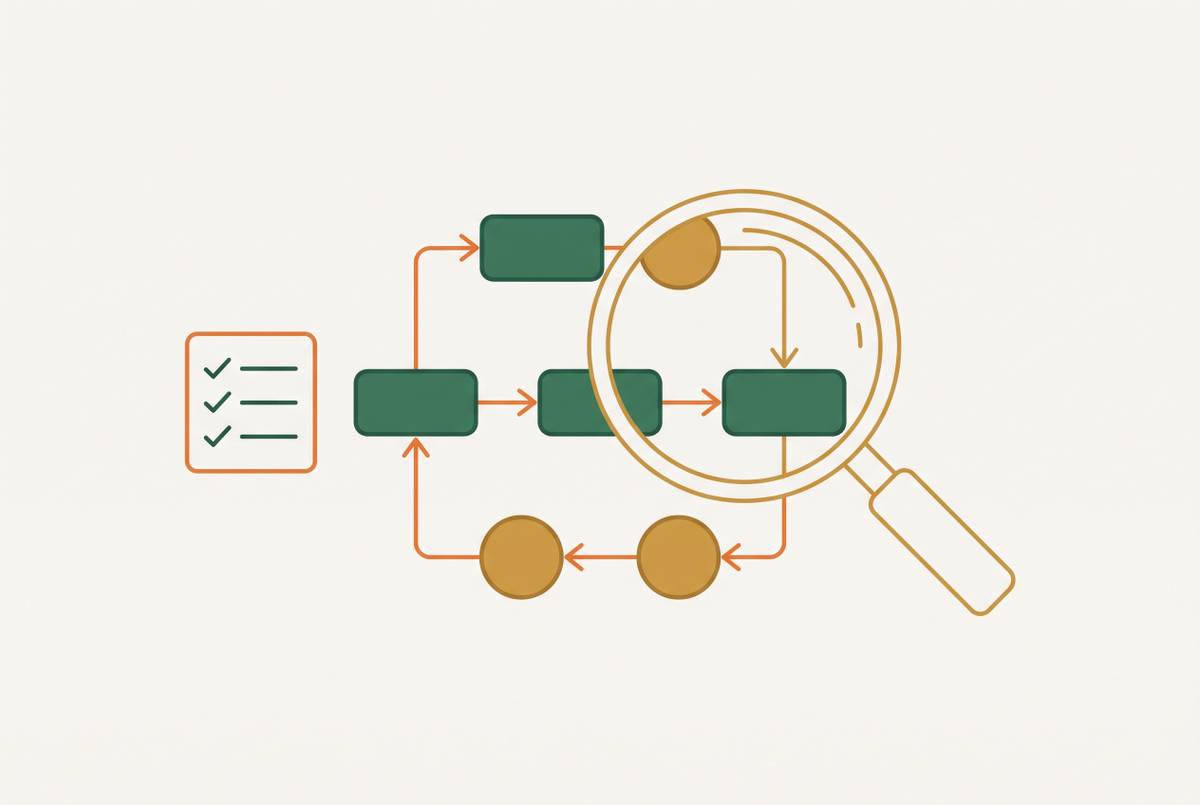
First, audit the current handoff process as it actually runs, not as it is documented, to identify which of the five failure modes are active and how severe the data infrastructure gaps are. Second, identify the single most painful break, whether it is the quality hold that keeps getting missed or the equipment status gap that keeps causing re-discovery, and rebuild that one transfer first. Third, connect the live data sources to a structured, automated handoff report for that process before expanding scope. Fourth, validate that incoming supervisors are acting differently based on the structured report. Changed behavior is the signal that the redesign is working, not report completion rates.
Terminal Use's approach applies directly to this sequencing. Its process audit has clients show exactly how the handoff runs today and where it hurts, before any tool selection or platform decision, which makes the starting condition a rebuild rather than a patch. That framing is closer to operational transformation than software implementation. Treating data infrastructure and agent deployment as a single rebuild, the audit identifies what must flow and the first live process ensures it flows systematically, with agents running the handoff rather than humans attempting to reconstruct it.
The principle that governs the sequencing is that automating a broken handoff process makes it worse faster. The same quality holds still get missed, but now at automated scale. Rebuilding requires fixing the process architecture before scaling the automation. A plan that requires quarters of infrastructure work before a single structured report reaches a single incoming supervisor is too broad. It needs to be scoped to one specific, painful break first.
The audit trail the rebuilt process creates is also the compliance and governance foundation that regulators and customers increasingly require. Audit-ready packages on demand, generated automatically from live data, replace the multi-day scramble that manual documentation creates when auditors arrive. The handoff is the right starting point for AI-first process redesign in manufacturing because it is concentrated, repeatable, and measurable. It is the process where a rebuilt approach produces visible results fastest.